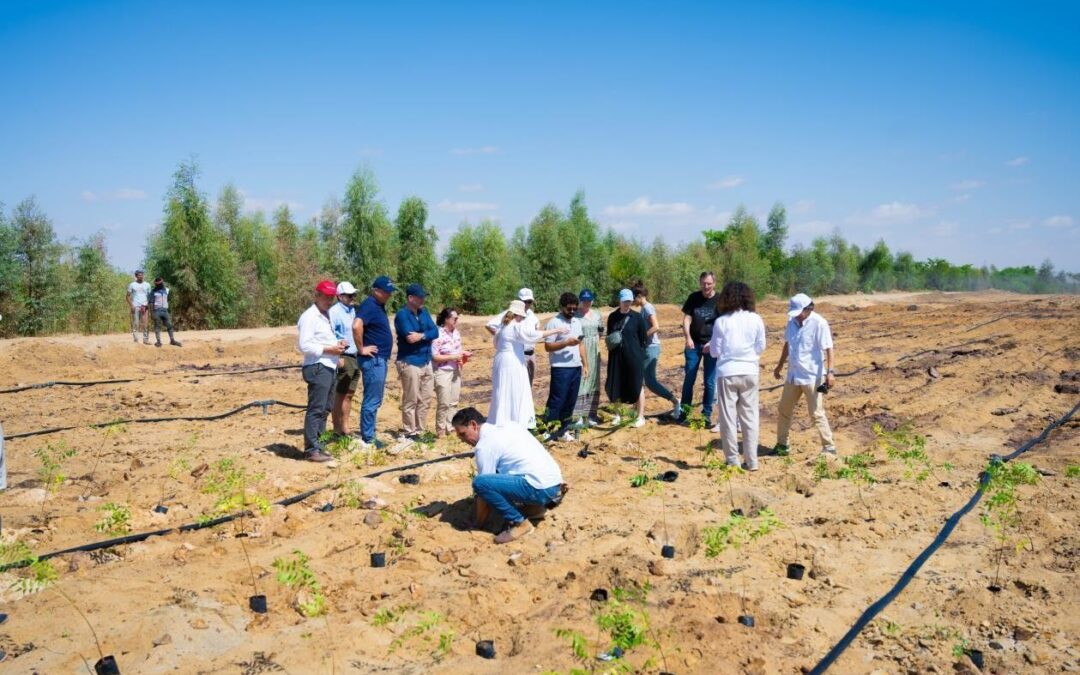
SEKEM has reached a major milestone in its efforts to regenerate Egypt’s Western Desert with the planting of 50,000 new trees at Wahat Farm. These trees ranging from Eucalyptus, Casuarina, Neem, Tipuana tipu, Dalbergia sissoo, Melia azedarach, Conocarpus, and Ziziphus spina-christi. They are selected for their resilience in arid climates and their ecological benefits, including shade, biodiversity, and soil regeneration. Many of these species also have important roles in agroforestry systems, offering benefits like wind protection, organic biomass, and carbon sequestration.
These 50,000 new trees add to the 400,000 previously planted trees at Wahat, which are being carefully maintained and show strong growth. Together, they represent a significant step toward SEKEM’s long-term vision of greening the desert through biodynamic methods.
The tree-planting initiative is more than an environmental gesture—it is part of an integrated, community-based development model. All farming practices at Wahat are Demeter- and EU Organic-certified and powered exclusively by renewable solar energy. With deep irrigation wells powered sustainably, and efforts to reduce evaporation through innovative water storage, even desert soils are being brought to life.