Update on Basalt project
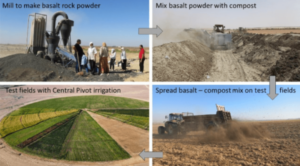
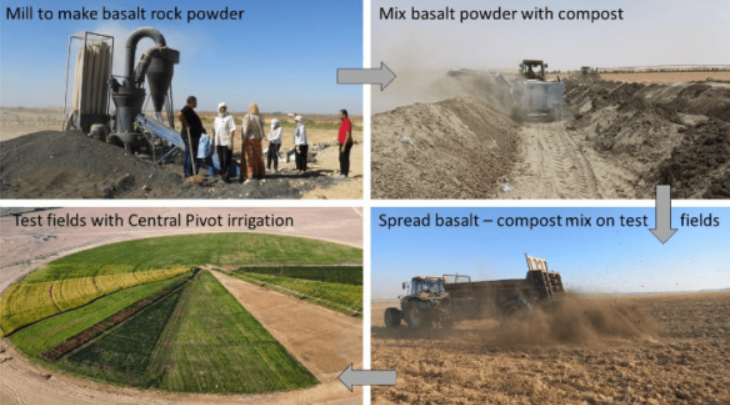
In December 2023, we introduced the Basalt project, a collaborative initiative between Heliopolis University (HU) and SEKEM aimed at addressing climate change through innovative agricultural practices. This project is based on the groundbreaking concept proposed by Dutch professor Dr. Olaf Schuiling, which leverages the natural ability of basalt rock to absorb CO2 when dissolved through weathering. By applying basalt rock powder to agricultural fields at SEKEM farm in Al Wahat Al Bahariya, the project seeks to enhance soil health, sequester carbon, and improve crop yields.
The Basalt project not only aims to capture atmospheric CO2 but also enriches the soil with essential nutrients. As plants grow, they absorb CO2 and, through their root systems, release organic acids that help dissolve basalt, making nutrients available to crops. This natural process fosters a healthier ecosystem, encouraging microbial development which is vital for sustainable agriculture.
As of 2025, the Basalt project is ongoing, and the outcomes to date are promising. Current chemical and microbiological analyses indicate a positive trajectory, highlighted by a significant increase in the population of beneficial soil microorganisms—key indicators of improved soil health. Additionally, organic matter content in the soil has notably increased compared to baseline measurements, suggesting enhanced soil fertility and greater potential for sustainable agricultural productivity.
We are excited about these developments and look forward to sharing more results as the project progresses, with hopes of scaling these innovative practices to benefit farms across Egypt.