
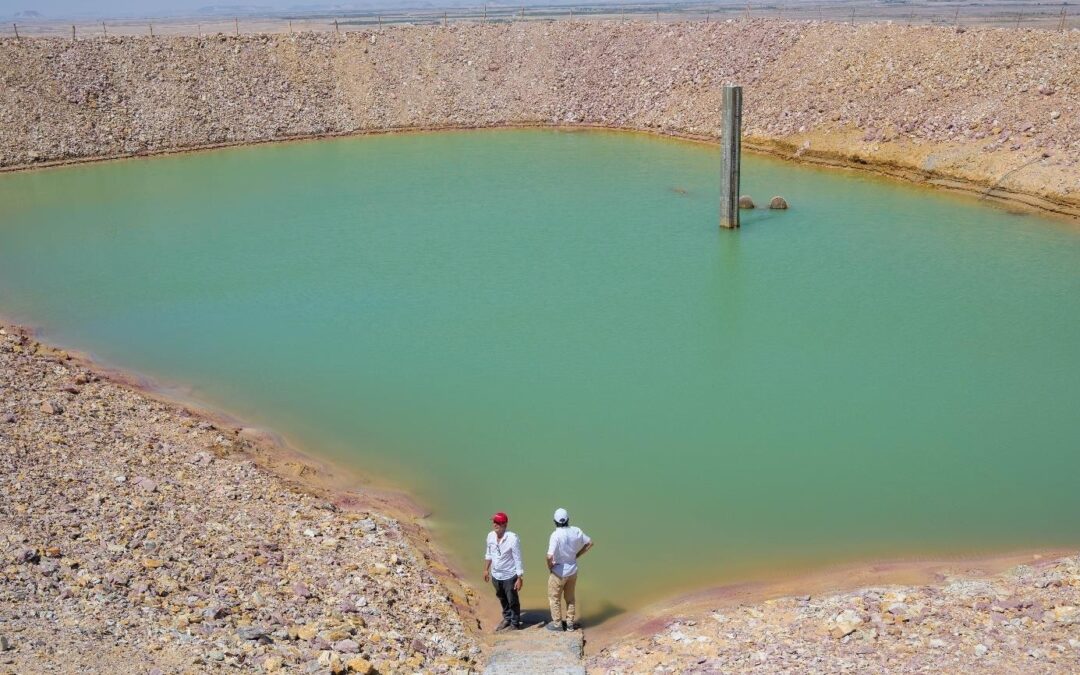
Irrigation used to be done by pumping water using solar power, which means irrigation can only take place during the day, which leads to high evaporation, especially in the pivots. A reservoir with a capacity of 22,000 m³ has now been created as a prototype on the slope above the fields. It is filled during the day and at night this water can be used for irrigation, only with the pressure from the difference in altitude.
Initial results from the wheat growing season using night irrigation on Pivot 20—compared to a daytime control plot on Pivot 5—are very promising. The night irrigation system led to a 15% reduction in water use, a 12.5% increase in wheat yield, and a remarkable 25.4% improvement in water efficiency (measured in cubic meters per kilogram of wheat). These outcomes exceed our initial water footprint reduction targets by 20%. The system is powered entirely by renewable energy and monitored with advanced soil sensors and digital water flow meters.
The project will generate over 1,100 carbon credits contributing significantly to the farm’s revenue and climate impact goals.
Harnessing Runoff Water for Sustainable Agriculture
SEKEM’s recent reports on its Wahat El Bahariya farm highlight a pioneering approach to water recycling within organic desert agriculture. During the implementation of a solar-powered night irrigation system, an unexpected opportunity for water reuse was discovered: irrigation runoff, along with water from neighboring farms, naturally accumulates at the farm’s lowest point due to an underground clay layer. Instead of allowing this runoff—now more saline than well water—to go to waste, SEKEM collects and recycles it to irrigate salt-tolerant perennial crops such as moringa and prickly pears. This innovative recycling not only maximizes water efficiency but also enables the productive use of water that would otherwise be lost, contributing to the farm’s overall sustainability.