by Mohamed Azzazi | Dec 26, 2025 | Uncategorized
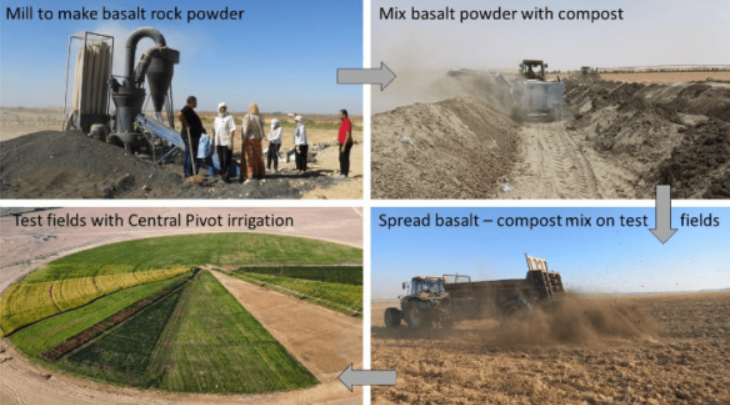
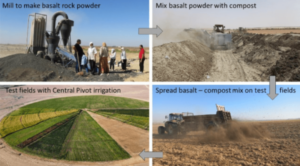
In December 2023, we introduced the Basalt project, a collaborative initiative between Heliopolis University (HU) and SEKEM aimed at addressing climate change through innovative agricultural practices. This project is based on the groundbreaking concept proposed by Dutch professor Dr. Olaf Schuiling, which leverages the natural ability of basalt rock to absorb CO2 when dissolved through weathering. By applying basalt rock powder to agricultural fields at SEKEM farm in Al Wahat Al Bahariya, the project seeks to enhance soil health, sequester carbon, and improve crop yields.
The Basalt project not only aims to capture atmospheric CO2 but also enriches the soil with essential nutrients. As plants grow, they absorb CO2 and, through their root systems, release organic acids that help dissolve basalt, making nutrients available to crops. This natural process fosters a healthier ecosystem, encouraging microbial development which is vital for sustainable agriculture.
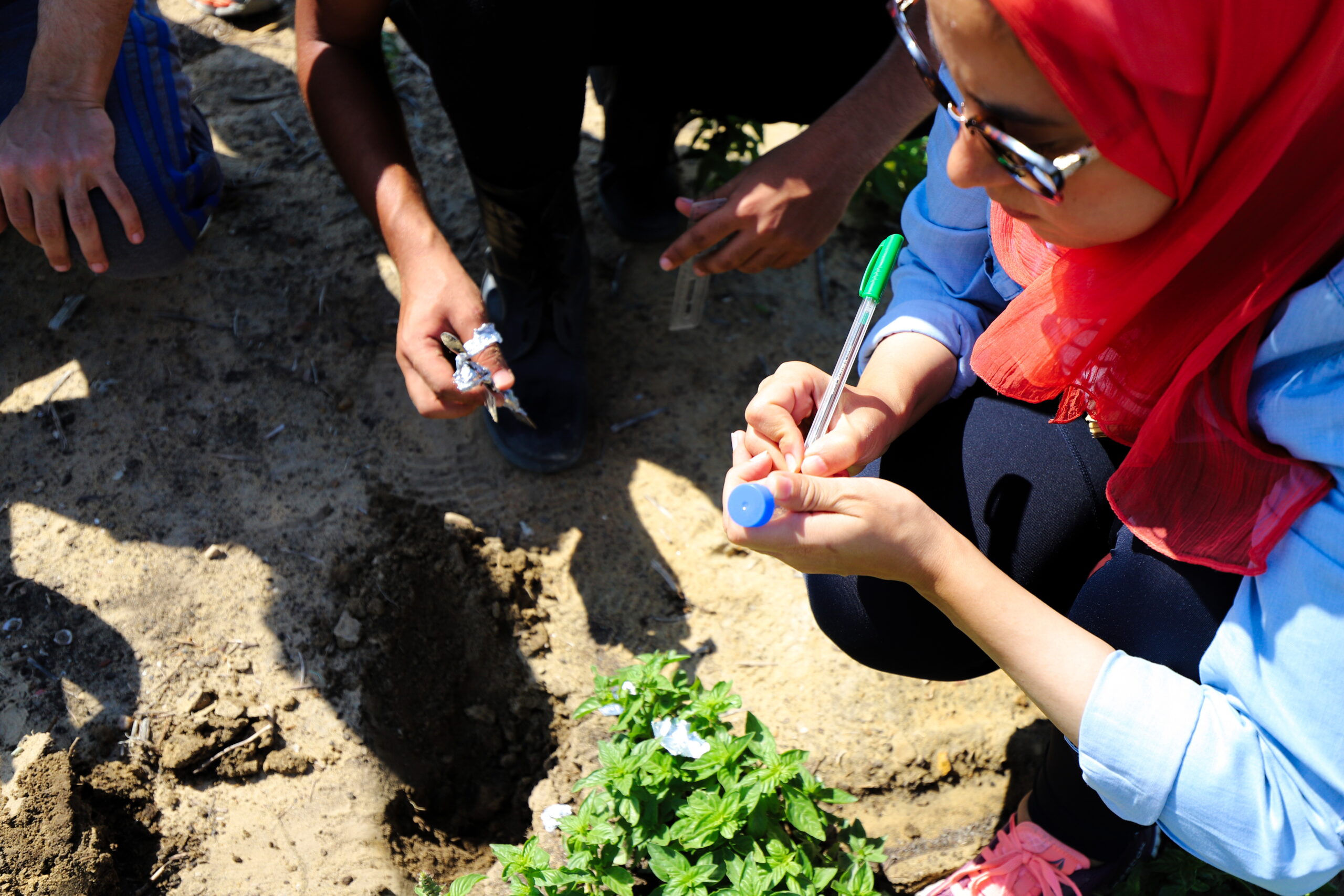
As of 2025, the Basalt project is ongoing, and the outcomes to date are promising. Current chemical and microbiological analyses indicate a positive trajectory, highlighted by a significant increase in the population of beneficial soil microorganisms—key indicators of improved soil health. Additionally, organic matter content in the soil has notably increased compared to baseline measurements, suggesting enhanced soil fertility and greater potential for sustainable agricultural productivity.
We are excited about these developments and look forward to sharing more results as the project progresses, with hopes of scaling these innovative practices to benefit farms across Egypt.
by Basma Hassan | Mar 9, 2023 | Uncategorized
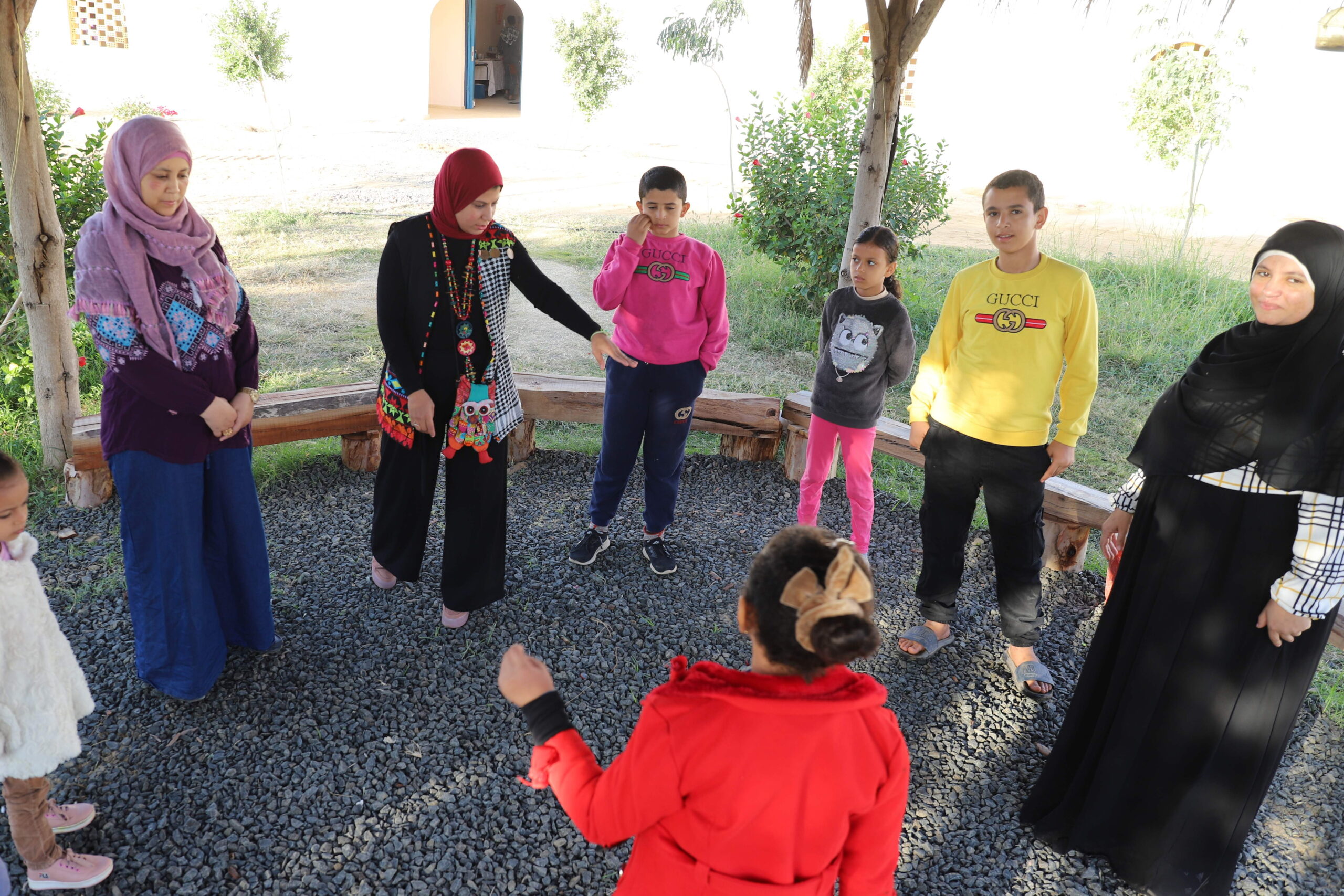
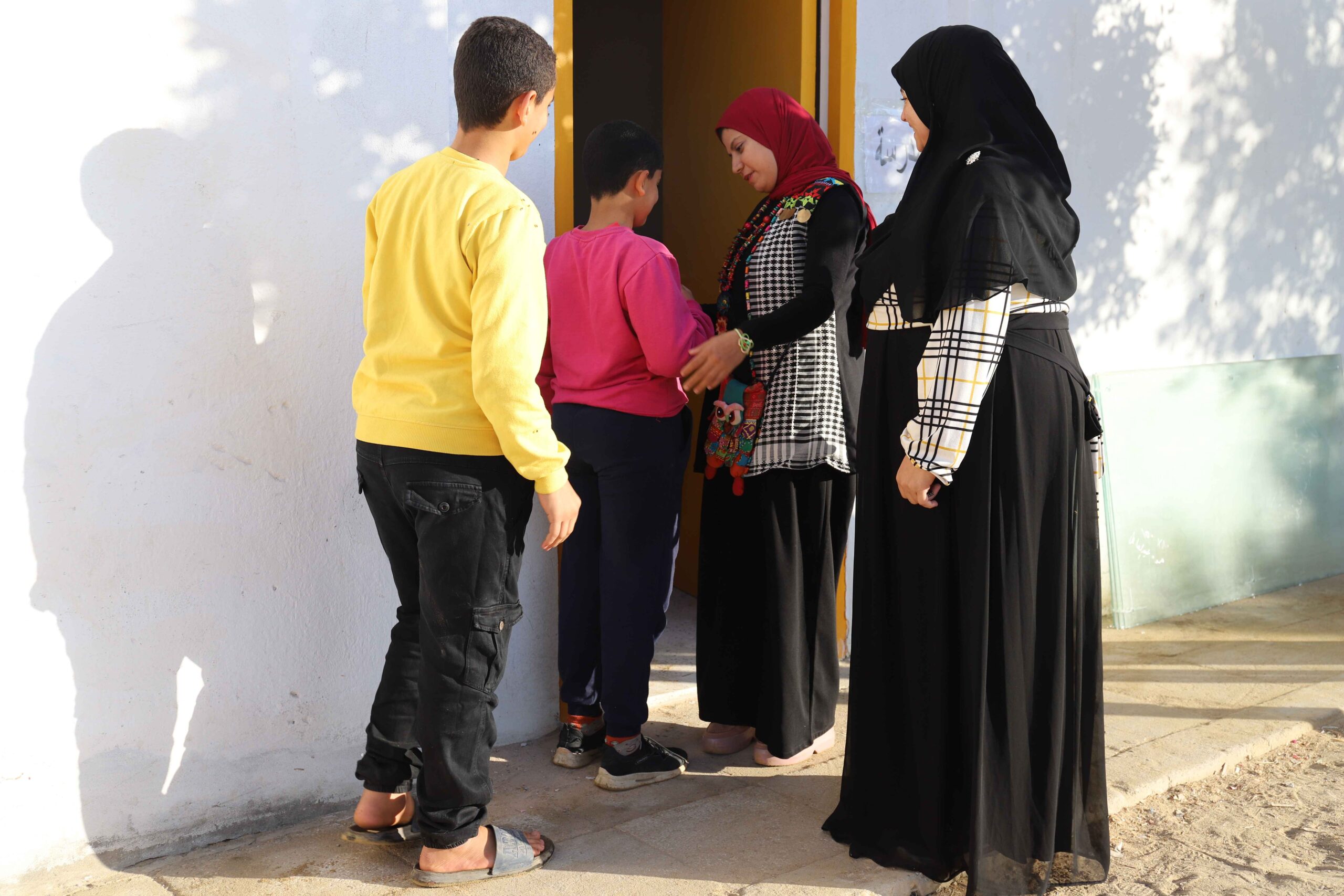
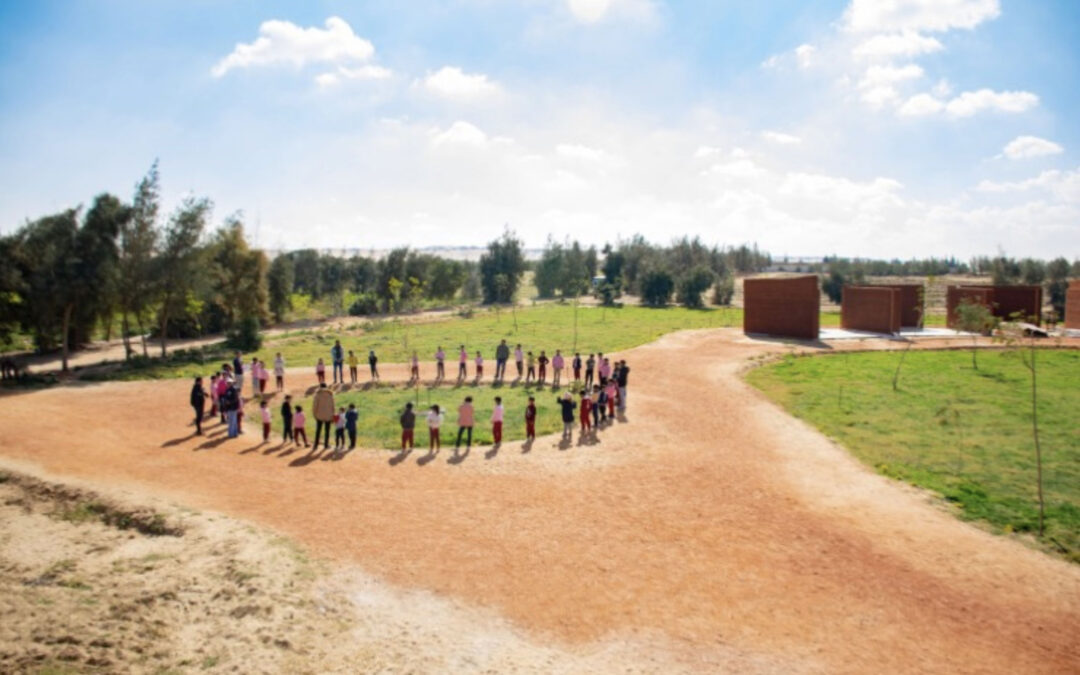
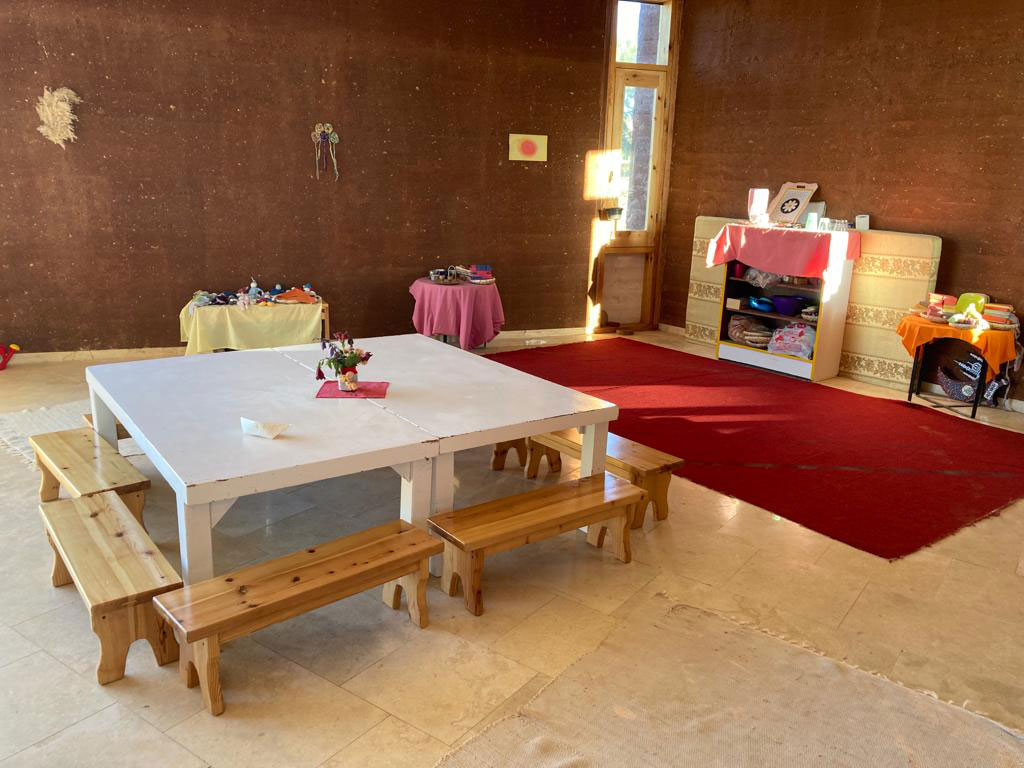
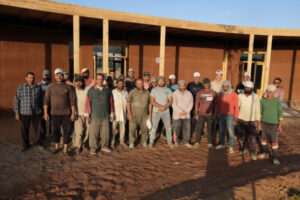
After the groundbreaking ceremony on the 1st of April 2022 we are delighted that school life has now found its way onto the Sekem El Wahat Farm. With 52 children of six different ages, being educated in the six classrooms it has been enlivened for some time now.
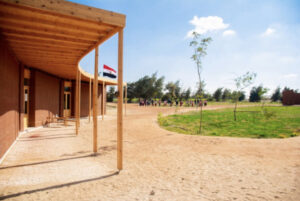
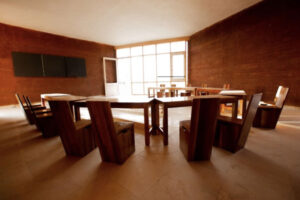
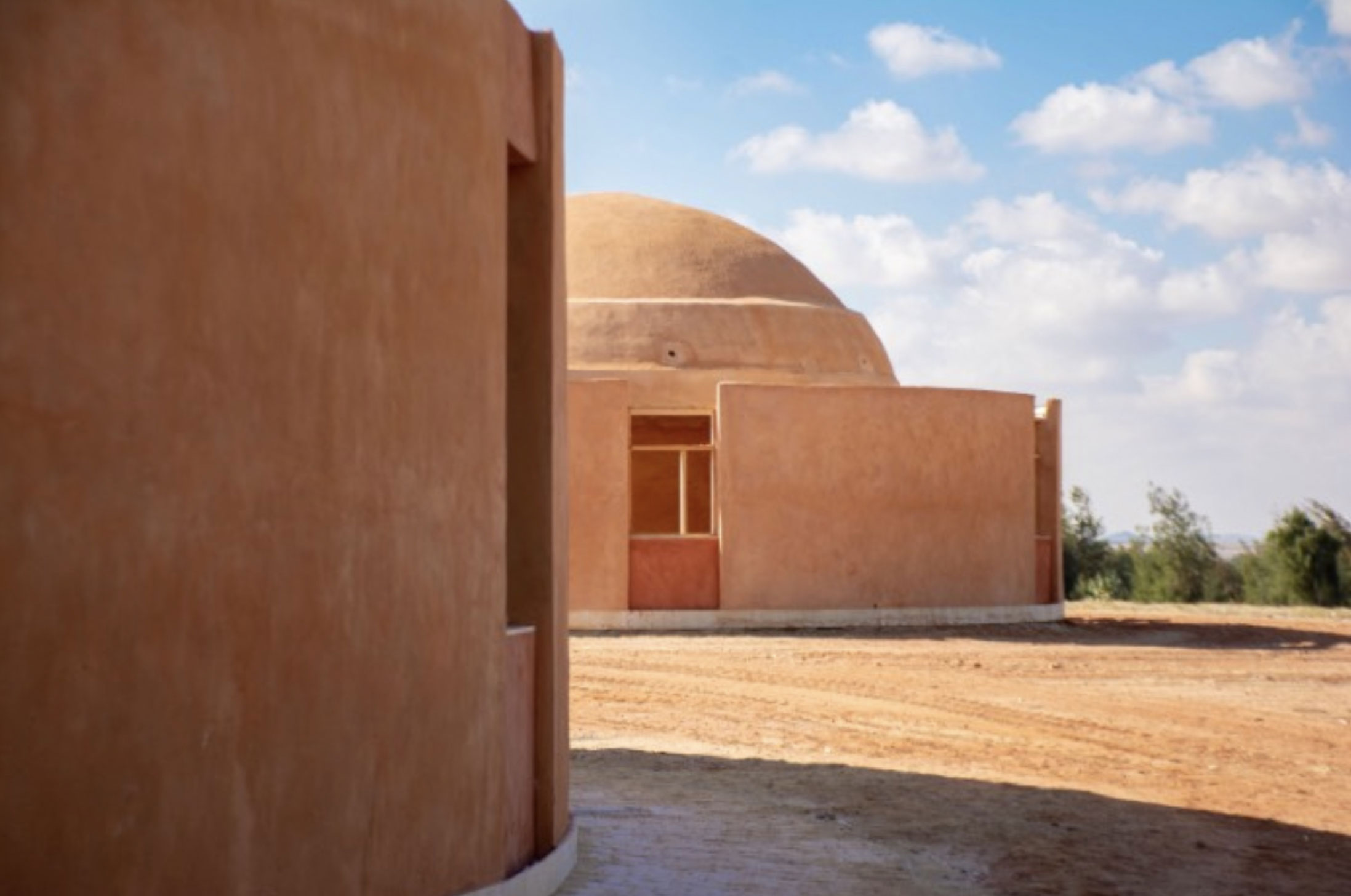
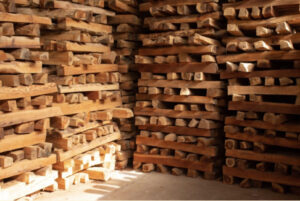
Here the children enjoy a pleasant room climate which is created by the natural and environmentally friendly construction method with the raw materials clay, wood and stone. The rooms offer space for a class size of 24 students.
Stepping out of one of the classrooms, one looks across green grass and newly planted trees to a building that offers space for offices and staff rooms, craft rooms and events.
A little further on, two kindergartens are being built. Five children are the first to look forward to a day with Manal in the morning.
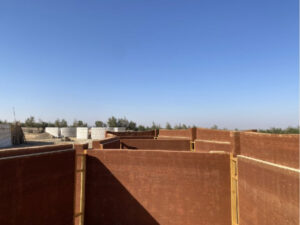
On the other side are the foundation walls of three more classrooms, which will be structurally completed and furnished for the beginning of the next school year.
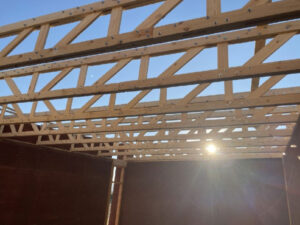
Our next steps for the first half of 2023 are as follows:
-> Completion of the three further classrooms (doors and windows for 58,000 LE, the roof for
160,000 LE and furnishing for 135,000 LE)
-> Window glass in the main building and kindergarten (10,800 LE)
-> Kitchen equipment and furnishing kindergarten (46,000 LE)
-> Completion of waste water treatment (35,900 LE)
-> Shade roofs main building and kindergarten (120,000 LE)
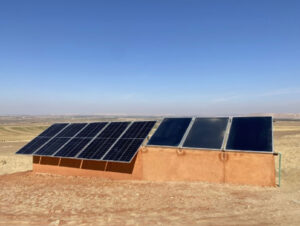
-> Hot water treatment (35,000 LE)
-> Fly protection doors (9,000 LE)
So in total we are planning to invest another 609,700 LE ≈18,704 €
by Basma Hassan | Jul 27, 2022 | Uncategorized
Since the establishment of healthy ecosystems is seen by SEKEM as a way to reduce the climate issue, biodiverse ecosystems play a crucial role in controlling the earth’s climate. Therefore, SEKEM is creating a scorecard that does not only consider the issue of the number of species in order to assess the effect of SEKEM’s operations on biodiversity, but also we gauging our success by the amount of sustainably managed and reclaimed land, the number of trees planted, the quality of the soil, the amount of water used, the variety of species represented, and the amount of chemical contamination.
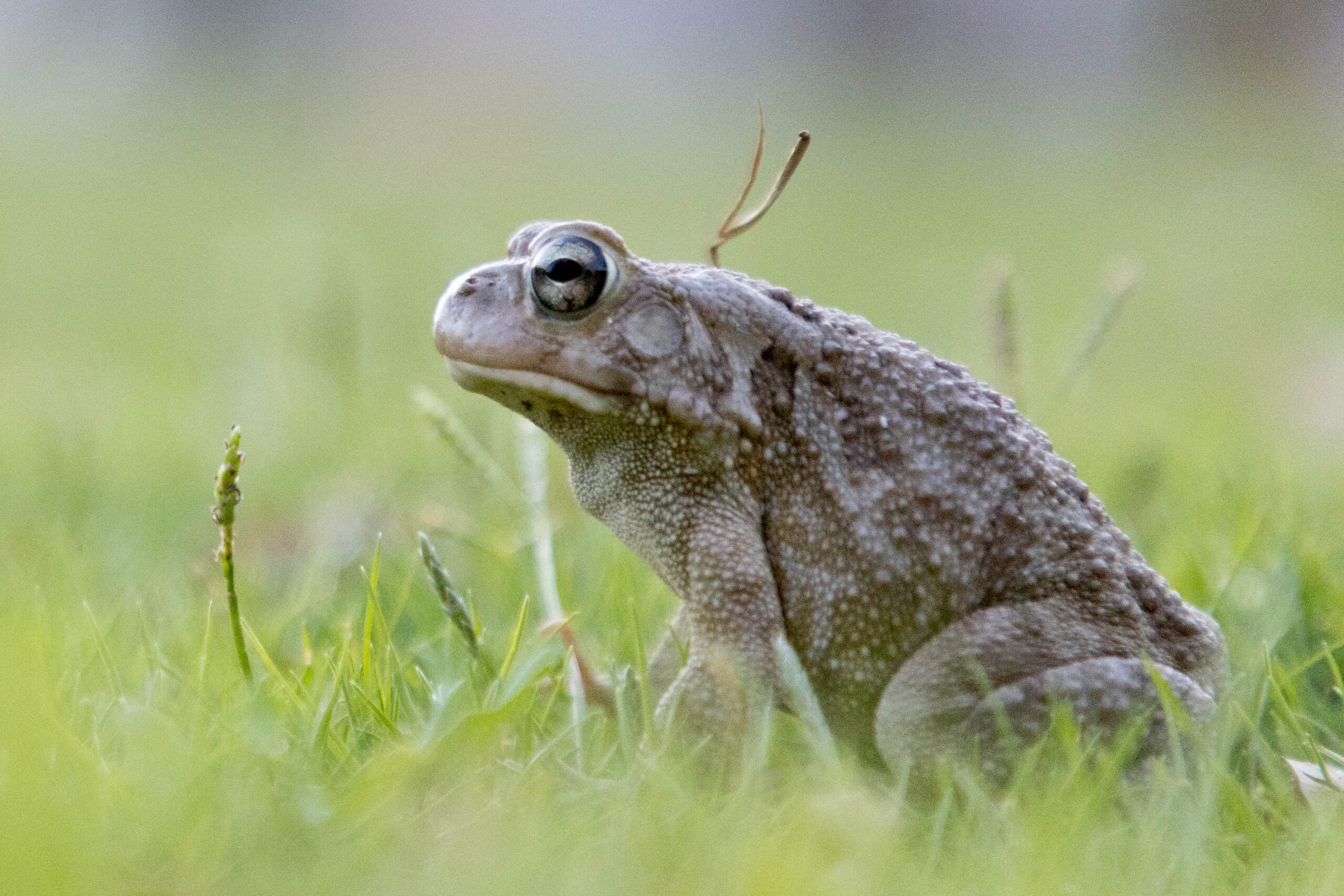
Our farm in Wahat Bahariya is a motivating illustration of how the desert can be turned into green, productive land. Wahat Farm, where land cultivation and biodiversity preservation were balanced, became a haven for numerous birds and insects.
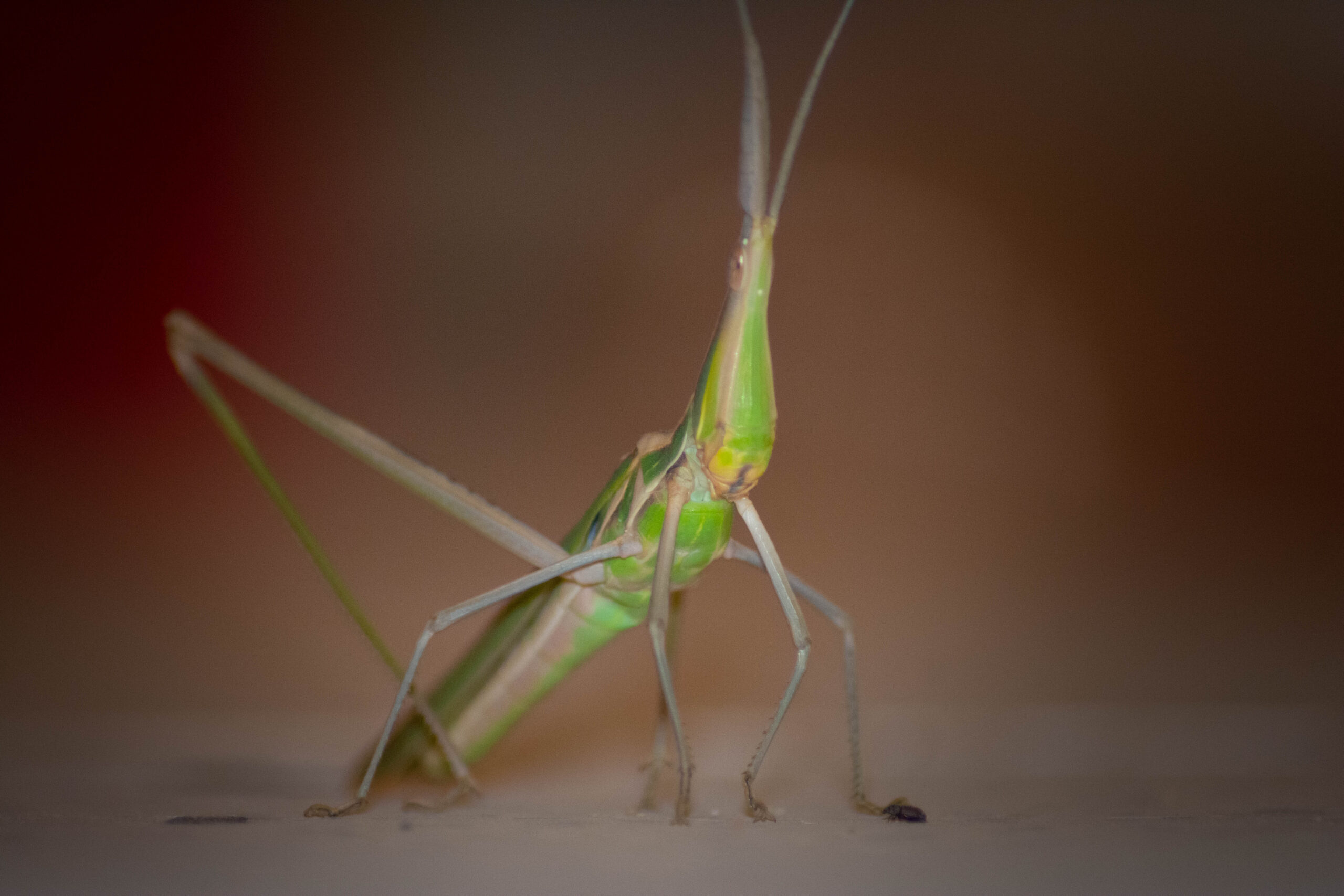
Along with the primary agricultural activity at the Greening the Desert project in Wahat, SEKEM offers an additional environmental service by issuing carbon credits. In order to expand the scope of carbon credits beyond simple emission reduction, SEKEM intends to articulate and include biodiversity’s co benefits into the Economy of Love carbon credit program. This can make it easier to interact with ethical businesses that aim to improve the fertility of the soil, increase wildlife habitat, and diversify the desert landscape in addition to offsetting their emissions.
Commonland visits El-Wahat
In order to implement the 4 Returns Framework, a useful sustainable development tool for system change that connects ecology, community values, culture, and long-term economic sustainability and enables all stakeholders to contribute their vision of a resilient landscape, on the ground, our friends from Commonland visited SEKEM Desert Farm in Wahat in June. The original idea was to implement this structure on the scale of the entire Wahat Bahreya, but Willem Ferwerda (founder and CEO of Commonland) decided to provide SEKEM with the opportunity to do so. At the Social Innovative Forum, which will be held in Wahat in October, all stakeholders, including representatives from the government, business, and local communities, could come together and co-create a perfect vision for Wahat. This ambitious and, needless to say, difficult idea is planned to be discussed in detail at that event.
by Basma Hassan | Dec 22, 2020 | Uncategorized
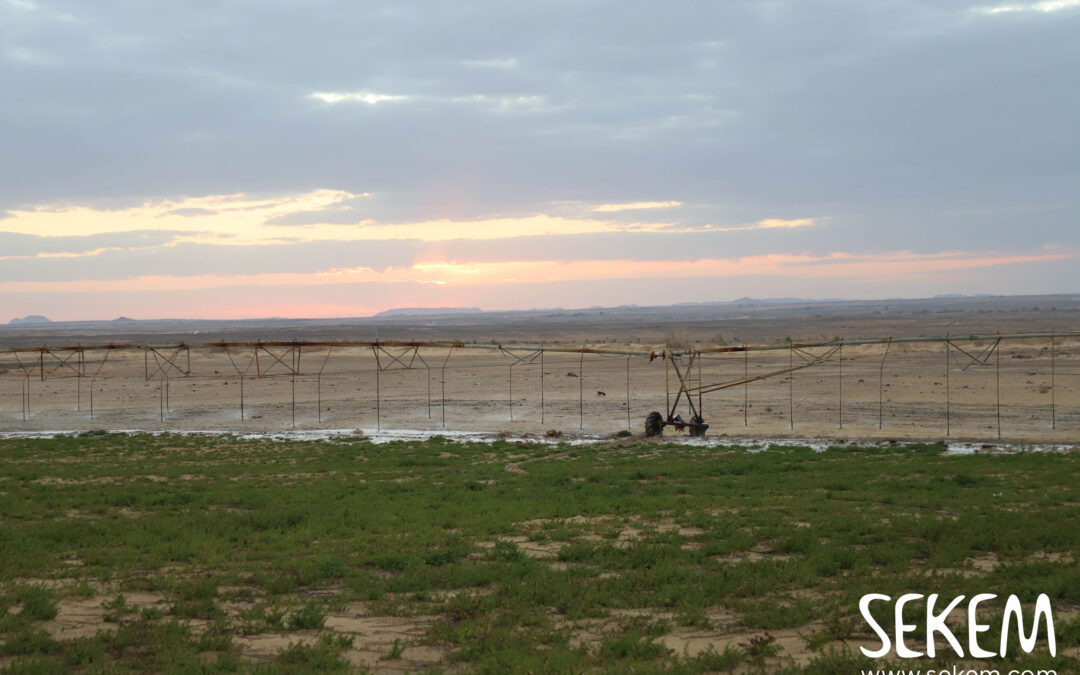
6 pivots in total are installed
Thanks to our valuable supporters, we were able to install the 3rd pivot watering system of the second phase, to reclaim additional 21 hectares of Egyptian desert land. So far we have a variety of crops: Chamomile, Cotton, Lemongrass, Marjoram and Garlic. And there is even more to come!
The Desert community is getting bigger.. And younger!
SEKEM Wahat is now home to 2 new families. Walid Gaber, an engineer, and Mohamed Hassan, a chef; both brought their families to build the SEKEM Wahat community.
6 beautiful children are now living happily in SEKEM Wahat. Additionally, 3 of SEKEM School’ talented teachers have also settled in to help establish SEKEM Wahat School and teach their new pupils.
Community-Based learning (CBL)
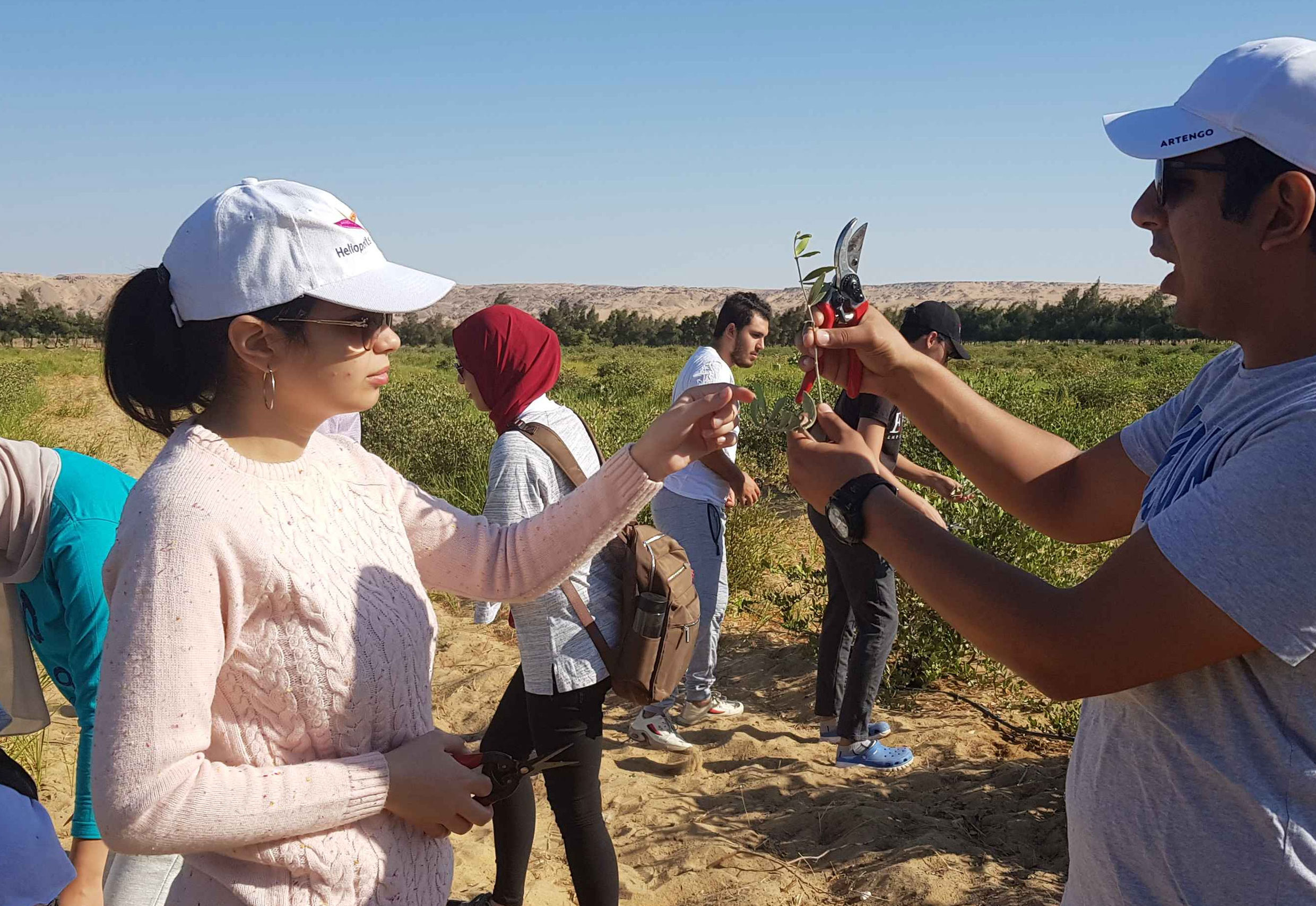
The desert has become full of life! Recently around 80 students from Heliopolis University joined SEKEM Wahat to implement community-based learning. Organic agriculture students planted 400 trees of Jojoba, 500 Casuarina trees, and 100 Mango trees. The Physical Therapy students screened the 80 co-workers and introduced to them good body postures to improve the health and well being of the workers.
There is much more to come!
![]()
by Basma Hassan | Sep 8, 2020 | Uncategorized
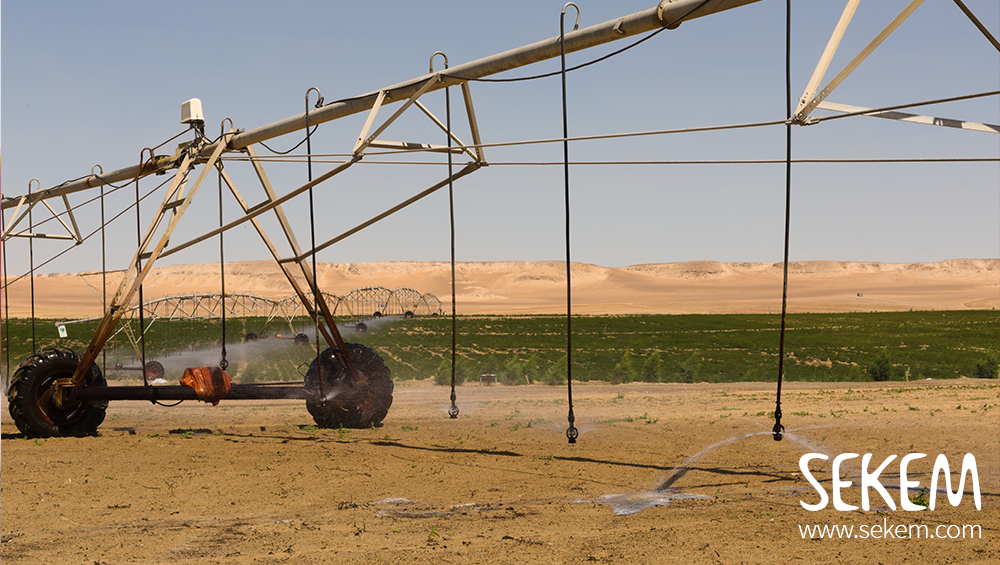
53% of the second phase acheived
Thanks to the great support of many people from all over the globe, we were able to install two more pivots and reclaimed additional 42 hectares of desert land. The newly restored land is already used to cultivate lemongrass, marjoram,spearmint, and peanuts. The first harvest is coming soon – so stay tuned.
We still have 188,000 Euro to raise,1 more pivot to install, and 21 hectare of desert land to reclaim.
Looking after the people – Daniela our new community member
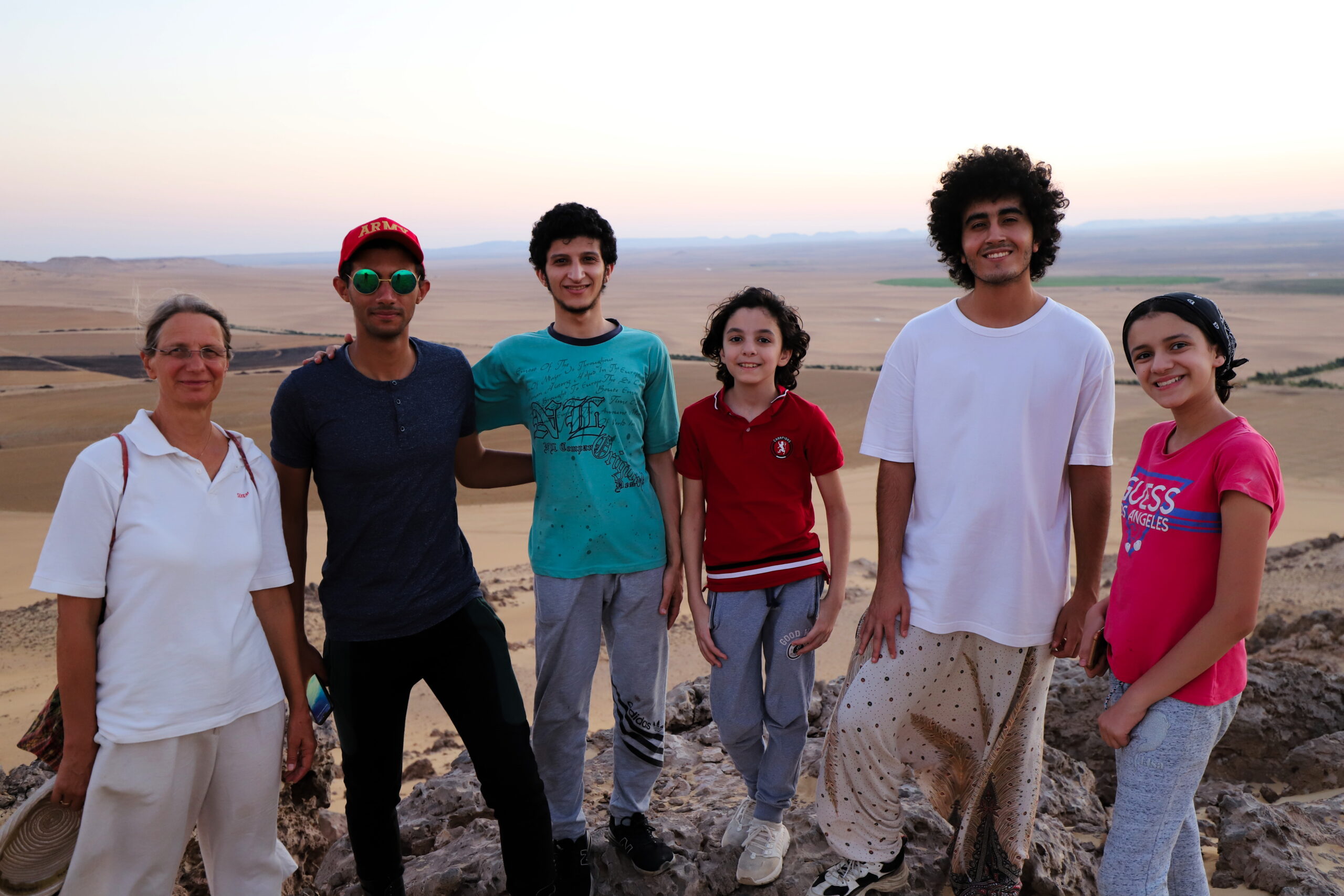
Since the digging of the first well at the SEKEM-Wahat farm, looking after the people and their wellbeing was a top priority. So with the first worker on sight, we thought of how to provide essential healthcare. We sought out doctors and nurses from the surrounding areas for regular checks. Now we are happy to have our full time resident Daniela, who is overseeing the establishment of SEKEM-Wahat basic medical center. Daniela is not only offering essential medical care to the workers, but also promoting a healthy nutrition concept and taking care of an integral health approach.
Let the youth plan our future
We are currently in the process of establishment our onsite “Desert Research Center” in SEKEM-Wahat. With such a vibrant learning center, we are not only a “demonstration site” for ecological and biodiversity activities but we are also engaging students from our partner, the Heliopolis University of Sustainable Development, in real community based learning activities. They have the chance now to be involved in organic agriculture, sustainable energy or medicinal plants research and field study.
https://www.hu.edu.eg
We are also partner with
https://www.devilag.eu
There is so much more to come
We are very greatful for your support!
by Basma Hassan | Apr 14, 2020 | Uncategorized
Chamomile:
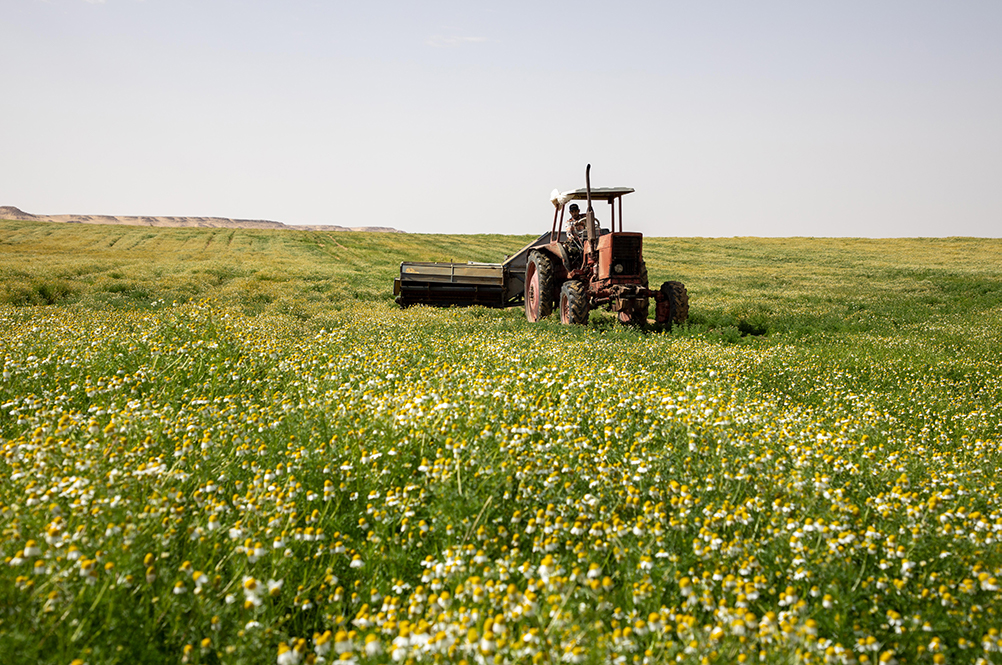
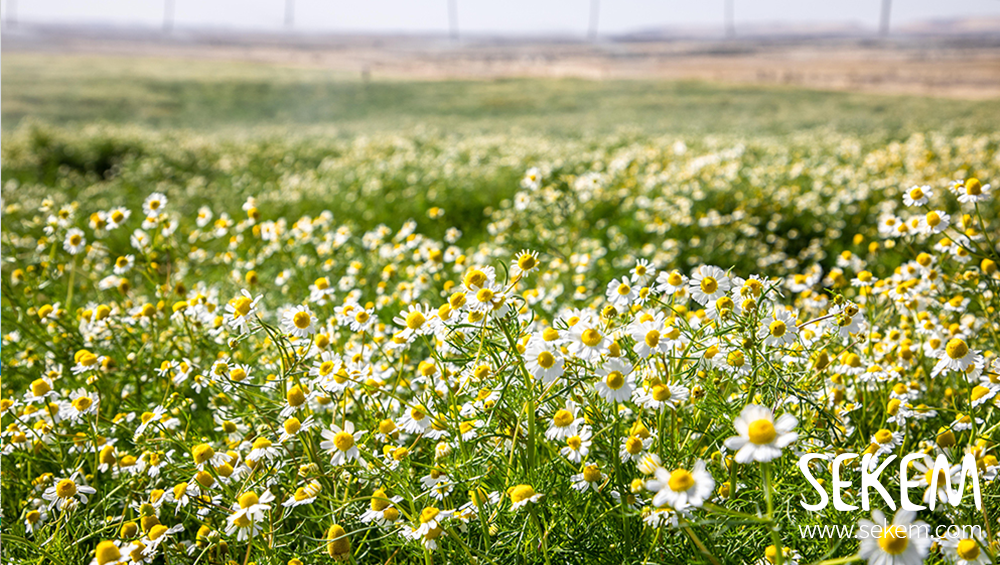
Meanwhile, blooming Chamomile covers the field of our second Pivot as far as eyes can see. The chamomile is ready for its first harvest and soon, the first products grown on former desert soil of our second Pivot, will be ready for shipping.
Other developments
Since we already reached a fair amount of our funding goal, we were able to set up the basic structure of the first two pivots of our second phase. These pivots will be used to cultivate peanuts and spearmint each covering 50 feddan (21 hectares).
We will keep you updated!